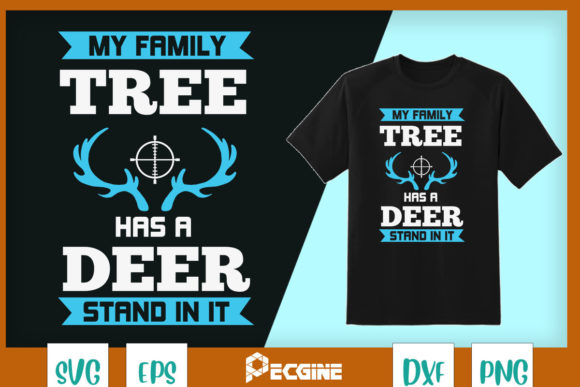
Embroidery Review: My Family Tree Has a Deer Stand in It
When an embroidery file lands on your screen, the first question isn’t about the file format—it’s about its soul. You’re looking for the spark that tells you this design can translate from pixels to stitches, from a digital product to a beloved handmade item. My Family Tree Has a Deer Stand in It delivers that spark with a wry, warm-hearted charm that feels instantly familiar to anyone with a touch of outdoors in their lineage.
The Mood and Personality in the Hoop
This isn’t a generic forest scene. The title is woven right into the artwork, creating a narrative. The mood is proudly rustic, gently humorous, and deeply personal. The layout balances the illustrative deer stand with the text, avoiding a cluttered feel that can choke a design in dense stitch areas. For embroidery designers, this is a gift: a graphic that already carries a story, making it perfect for personalized gifts and custom apparel with a specific sentiment.
The visual personality leans toward a clean, illustrative style. This suggests it will handle satin stitches for borders and text, and fill stitches for the stand itself, without collapsing into a muddy blob on fabric. When I envision it stitched out, I see it on a medium-to-dark heather gray sweatshirt, the thread colors popping with a warm, earthy palette. It doesn’t scream; it tells a quiet, proud family joke.
Where This Design Naturally Belongs
Let’s talk real projects. Picture a client who wants a unique gift for their father or brother—someone who’d rather be in a deer stand than anywhere else. You’re not just stitching a deer; you’re stitching a badge of identity. This design naturally belongs on sturdy, everyday items. A heavyweight cotton tote bag for carrying gear. A well-made apron for the cook who’s also a hunter. A classic cap, though that curved surface will need careful planning.
For small business owners and Etsy sellers, this is a strong contender for holiday gift listings. Think Thanksgiving, Christmas, or Father’s Day. Embroidered onto a premium pillow cover or a thick tea towel, it becomes boutique merchandise with a story. It also has potential for baby items in a rustic-themed nursery—perhaps a simple outline on a blanket—speaking to a family tradition from the start.
A Practical Scenario: The Custom Embroidered Sweatshirt
Imagine you’ve got an order for a custom embroidered sweatshirt. The client provides the phrase, and you find this design. You load the file, thinking through the practicalities. The text is integral, so stitch clarity is paramount. You’ll want to test the smaller lettering on scrap fabric first to ensure the running stitches or small satin columns remain legible. On a textured fabric like a fleece-backed sweatshirt, a good stabilizer is non-negotiable to prevent puckering around the fill stitch areas of the deer stand illustration.
Finished, the project feels cohesive. The design doesn’t look slapped on; it looks like it belongs. That’s the magic for craft businesses: a finished product that elevates the perceived value and builds customer trust. It feels intentionally handmade, not mass-produced.
Performance in Real-Life Embroidery Situations
For commercial embroidery and craft fair products, versatility matters. My Family Tree Has a Deer Stand in It, given its included file formats, should adapt well to various scales. On a large field like a sweatshirt back, it can be a statement. Reduced for a left-chest placement on a t-shirt, it becomes a subtle badge. As an embroidered patch, it would hold its own, though the density of the stand’s structure needs to be checked to avoid a stiff, bulky patch.
It’s wise to consider printable mockups and digital product previews for your shop. This design, with its clear artwork and text, renders well in black and white mockups to show how it might look on dark fabric. That helps buyer engagement, letting them visualize the gift.
Where to Use With Careful Consideration
Every design has its limits, and an experienced review must note them. The detailed corners of the deer stand structure and the tiny lettering mean small hoop sizes could be problematic. On very thin or stretchy fabric, like a lightweight t-shirt, the combined stitch areas might stress the material. You’d need a light but firm stabilizer and might consider simplifying the design’s detail level if possible.
Dark fabric backgrounds are a natural fit for the theme, but thread color contrast is critical. A test run with your chosen palette is essential. Avoid dense stitch areas overwhelming lighter fabrics, which can show through. For curved surfaces like caps, the layout’s width and height need confirmation—the design might need repositioning to sit correctly on the crown.
For products needing frequent washing, like kitchen towels or baby clothes, a robust stitch density and quality threads will ensure longevity. Inspect the small details in your test stitch-out; any weakness there will show after washes.
Notes for the Working Designer
Before you commit this to a client’s order or your small shop merchandise, do your due diligence. Test the embroidery file on your typical scrap fabric—the one you use for your main products. Check the actual stitch count and density if the file provides it; if not, running a small sample is the only way. Confirm the effective hoop size needed for clarity.
Always compare how it looks in a light and dark fabric mockup. The mood changes subtly with the background. For commercial embroidery projects, double-check the licensing terms of the digital embroidery file. Can you use it for finished products you sell? The product description notes multiple file formats, which is excellent for flexibility, but the license specifics are paramount for craft business use.
Finally, think about brand consistency. If your handmade shop leans toward rustic, humorous, or family-oriented themes, this design slots in beautifully. It’s giftable, recognizable, and carries a professionalism through its cohesive concept. It’s not just a graphic; it’s a ready-made story for your embroidery project.
In the end, My Family Tree Has a Deer Stand in It passes the practical review. It’s a design with character that translates well into the physical world of stitches and fabric. It supports the needs of embroidery designers, creative entrepreneurs, and makers looking for assets that resonate on a personal level. With careful testing and application, it will stitch out as a confident, charming piece that honors a very specific slice of family life.